
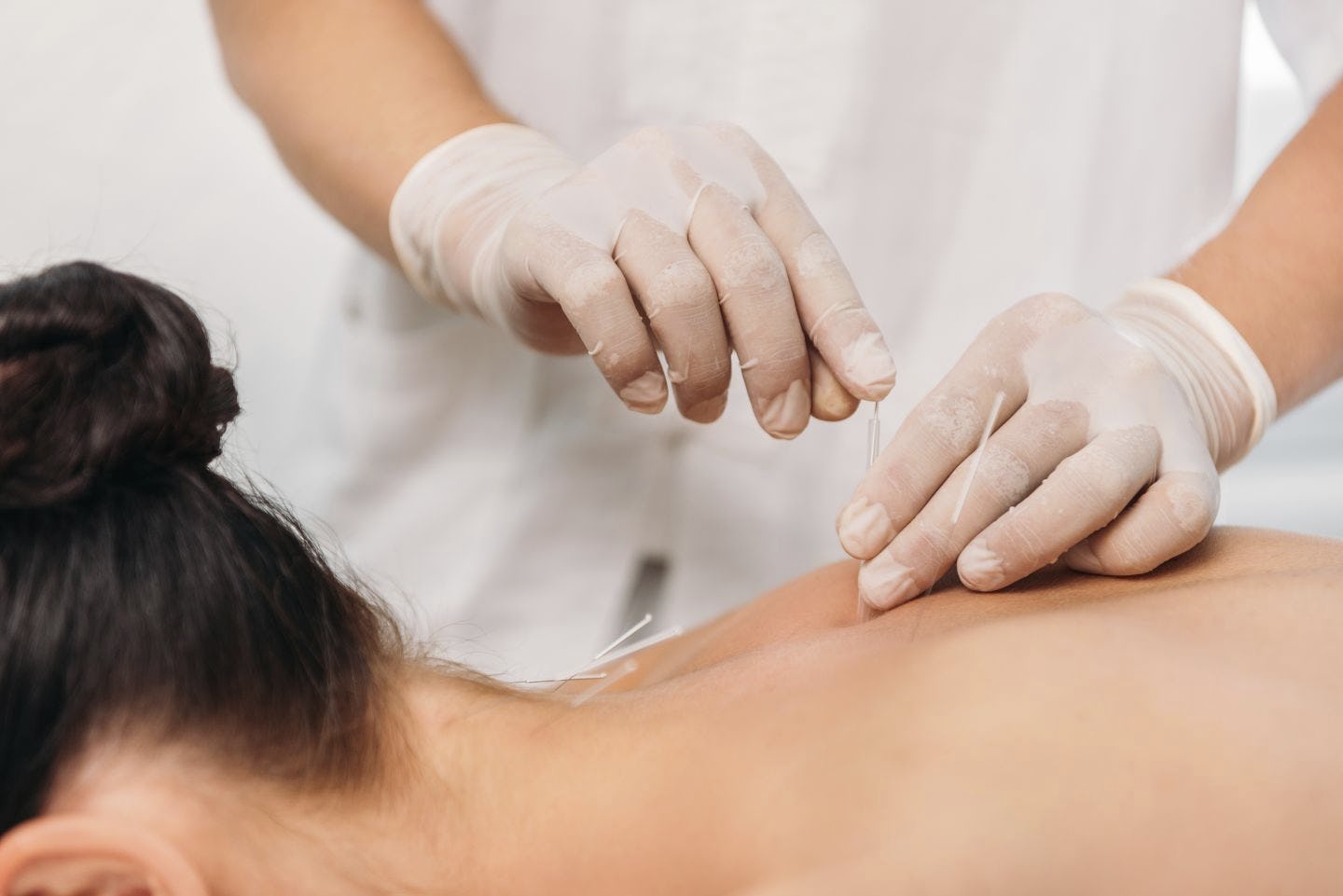
If you’ve been struggling with muscle pain, tension, or trigger points that don’t seem to respond to conventional treatment, dry needling may offer the relief you’ve been looking for. This technique uses thin, sterile needles to target specific points in muscles, releasing tension and reducing pain in ways that massage and stretching alone sometimes cannot achieve. At Midas Physiotherapy in Oakville, our trained physiotherapists use dry needling as part of a comprehensive treatment approach to help you overcome pain and restore normal function.
Dry needling has gained significant popularity in recent years, and for good reason—research supports its effectiveness for reducing muscle pain and improving function in a variety of conditions. It’s particularly effective for myofascial trigger points—those tight, painful knots in muscles that can cause local pain and refer pain to other areas. When other treatments haven’t fully resolved your muscle pain, dry needling often provides the breakthrough that allows healing to progress.
For Oakville residents dealing with persistent muscle pain, tension headaches, neck and back pain, or sports injuries involving muscle tightness—our Cornwall Road clinic offers expert dry needling as part of your personalized treatment plan.
What Is Dry Needling?
Dry needling is a technique in which thin, solid filament needles are inserted into muscles, tendons, ligaments, or near nerves to treat pain and movement dysfunction. The term “dry” distinguishes it from “wet” needling, which involves injecting substances (like cortisone or local anesthetic). In dry needling, nothing is injected—the needle itself is the treatment tool.
The needles used are very thin—typically 0.25–0.30 mm in diameter, much thinner than the hypodermic needles used for injections or blood draws. They’re sterile, single-use, and disposed of after each treatment. The thinness of the needles means that dry needling is generally well-tolerated, with most patients experiencing minimal discomfort during insertion.
How Dry Needling Works: The Science
Dry needling works through several mechanisms, both local (at the needle site) and systemic (affecting the broader nervous system).
Trigger Point Release
The primary target of dry needling is the myofascial trigger point—a hyperirritable spot within a taut band of skeletal muscle. Trigger points are associated with a contracted knot of muscle fibers, local tenderness, referred pain patterns, and often motor and autonomic dysfunction. When a needle penetrates a trigger point, it can produce a local twitch response (LTR)—a brief, involuntary contraction of the muscle fibers. This twitch response is associated with release of the trigger point, reduced muscle tension, and pain relief.
Biochemical Changes
Research has shown that trigger points have an abnormal biochemical environment—elevated levels of inflammatory mediators, sensitizing substances, and neurotransmitters. Dry needling has been shown to normalize this environment, reducing the concentration of pain-producing substances and creating conditions more favorable for healing. Studies using microdialysis have demonstrated decreased levels of substance P, calcitonin gene-related peptide (CGRP), and other inflammatory markers after dry needling.
Increased Blood Flow
Trigger points are associated with local hypoxia (reduced oxygen) due to sustained muscle contraction compressing local blood vessels. The micro-trauma created by needle insertion stimulates a local healing response, including increased blood flow to the area. This improved circulation helps flush out inflammatory substances and brings oxygen and nutrients needed for tissue healing.
Neurophysiological Effects
Dry needling produces effects throughout the nervous system: Segmental effects occur at the spinal cord level, where needle stimulation can inhibit pain signals and reduce muscle hypertonicity. Central effects involve changes in the brain’s processing of pain signals, potentially reducing central sensitization. The overall result is decreased pain perception and normalized muscle tone.
Connective Tissue Effects
When the needle is manipulated (rotated or moved), it creates a mechanical “wind-up” effect on the connective tissue (fascia) surrounding the muscle. This mechanical stimulus may help reorganize collagen fibers and reduce fascial restrictions, contributing to improved tissue mobility.
Conditions Treated with Dry Needling
Dry needling can be beneficial for a wide range of musculoskeletal conditions, particularly those involving muscle dysfunction, trigger points, and myofascial pain.
Neck and Head Conditions
- Cervicogenic headaches: Headaches arising from neck dysfunction, often involving trigger points in suboccipital, upper trapezius, and sternocleidomastoid muscles
- Tension-type headaches: Associated with muscle tension in the neck and head
- Neck pain and stiffness: Including whiplash-related symptoms
- TMJ/jaw dysfunction: Trigger points in the masseter, temporalis, and pterygoid muscles
Shoulder Conditions
- Rotator cuff problems: Muscle tightness and trigger points affecting shoulder function
- Frozen shoulder: As part of comprehensive treatment to reduce muscle guarding
- Shoulder impingement: Addressing rotator cuff and scapular muscle dysfunction
Back Conditions
- Low back pain: Trigger points in paraspinal muscles, quadratus lumborum, gluteal muscles
- Thoracic pain: Mid-back muscle tension and trigger points
- Sciatica-related muscle tightness: Piriformis syndrome and associated gluteal muscle involvement
Upper Limb Conditions
- Tennis elbow (lateral epicondylitis): Trigger points in forearm extensor muscles
- Golfer’s elbow (medial epicondylitis): Trigger points in forearm flexor muscles
- Wrist and hand pain: Related to forearm muscle trigger points
Lower Limb Conditions
- Knee pain: Including patellofemoral pain with quadriceps and hip muscle involvement
- Hip pain: Trigger points in gluteal muscles, hip flexors, and piriformis
- Hamstring tightness and strains: Facilitating recovery and reducing recurrence risk
- Calf pain and tightness: Including Achilles-related muscle tension
- Plantar fasciitis: Trigger points in calf muscles and intrinsic foot muscles
Other Conditions
- Chronic pain syndromes: Including fibromyalgia (as part of comprehensive management)
- Sports injuries: Muscle strains and overuse injuries
- Post-surgical muscle tightness: When appropriate in the rehabilitation timeline
What to Expect During Dry Needling Treatment
Understanding what happens during a dry needling session helps you prepare and know what to expect.
Before Treatment
Before performing dry needling, we conduct a thorough assessment to identify the muscles and trigger points contributing to your symptoms. We explain the procedure, discuss the potential benefits and risks, and obtain your informed consent. We’ll ask about contraindications (see below) and answer any questions you have. Wear comfortable, loose-fitting clothing that allows access to the treatment area, or be prepared to expose the area being treated.
During the Procedure
You’ll be positioned comfortably so the therapist can access the target muscles. The skin is cleaned, and a thin, sterile needle is inserted through the skin into the muscle. You may feel a brief pinch as the needle penetrates the skin, followed by a deep ache or cramping sensation as the needle enters the trigger point. This sensation typically lasts only seconds.
When the needle hits a trigger point, you may experience a local twitch response—a brief, involuntary muscle contraction. This twitch is actually a positive sign indicating that the trigger point has been located and released. Some patients describe it as a strange but satisfying sensation, like a muscle cramp releasing. The needle may be moved in and out slightly (pistoning technique) or rotated to stimulate the tissue.
A treatment session typically involves needling multiple trigger points. Each needle insertion takes only seconds, though the needle may remain in place for 10–30 seconds, or longer in some techniques. A typical session lasts 15–30 minutes, including assessment and treatment.
After Treatment
After dry needling, you may notice immediate improvement in pain and range of motion, or there may be temporary soreness in the treated area—similar to post-exercise muscle soreness. This soreness typically peaks 24–48 hours after treatment and resolves within 1–3 days. Staying well-hydrated, gentle movement, and applying heat can help manage post-treatment soreness.
We typically recommend gentle stretching and movement after treatment to maintain the improvements achieved. You can usually resume normal activities immediately, though high-intensity exercise on the treated muscles is often best avoided for 24 hours. We may provide specific exercises to complement the dry needling treatment.
Frequently Asked Questions
Is dry needling painful?
Most patients find dry needling tolerable, though not pain-free. You may feel a brief pinch as the needle enters the skin, followed by a deep ache or cramping when the needle hits a trigger point. The local twitch response can feel like a brief muscle cramp. These sensations are short-lived—typically lasting only seconds. Many patients find the temporary discomfort worthwhile given the relief it provides.
How is dry needling different from acupuncture?
While both use thin needles, they’re fundamentally different practices. Acupuncture is based on traditional Chinese medicine, targeting points along meridians to balance energy flow. Dry needling is based on Western anatomy and physiology, targeting specific anatomical structures—primarily trigger points in muscles—identified through clinical examination. The assessment, point selection, and treatment rationale differ significantly.
How quickly will I notice results?
Many patients notice immediate improvement in range of motion and pain after a single session. However, some soreness is common for 24–48 hours post-treatment. The full benefit may develop over several treatments, particularly for chronic conditions. If dry needling is going to help, you should typically notice some positive response within 2–4 sessions.
What is the soreness I feel after treatment?
Post-treatment soreness is like the muscle soreness you feel after exercise—it reflects the therapeutic stimulus to the tissue. The needle creates a local healing response that temporarily increases inflammation before resolving. This soreness typically peaks at 24–48 hours and resolves within 1–3 days. Gentle movement, hydration, and heat application can help.
Is dry needling safe?
Yes, when performed by trained practitioners. Our physiotherapists have completed specialized training in dry needling, including anatomy, technique, and safety protocols. Serious complications are rare. We thoroughly screen for contraindications and use strict sterile technique. The most common side effects—soreness, minor bleeding, bruising—are mild and temporary.
Can I exercise after dry needling?
Light activity and gentle stretching are encouraged after dry needling. High-intensity exercise targeting the treated muscles is best avoided for 24 hours to allow the tissue to respond to treatment. We often provide specific exercises to complement the dry needling and maximize its benefits.
What is a local twitch response?
A local twitch response (LTR) is a brief, involuntary contraction of the muscle fibers when the needle hits a trigger point. It feels like a quick muscle cramp or jump. Research suggests that eliciting twitch responses is associated with better treatment outcomes—it indicates the trigger point has been accurately located and released.
How many sessions will I need?
This varies by condition and individual response. Some patients improve significantly after 1–2 sessions. Chronic conditions may need 4–8 sessions. If there’s no improvement after 3–4 sessions, we’ll reassess your condition and consider alternative approaches. Remember that dry needling is part of a comprehensive program—exercises and other treatments continue between sessions.
Can anyone have dry needling?
Most people can safely have dry needling, but there are some contraindications. Absolute contraindications include needling into infected areas, and patient refusal. Relative contraindications requiring caution include bleeding disorders, anticoagulant use, pregnancy, compromised immune system, and certain other conditions. We screen for these before treatment.
Why is dry needling combined with other treatments?
Dry needling reduces pain and muscle tension, creating a window of opportunity. But it doesn’t address the underlying factors that caused the trigger points in the first place—weakness, postural issues, movement patterns, or overload. Exercise, manual therapy, and education address these factors, producing lasting improvement. The combination is more effective than either approach alone.
Can dry needling help my chronic pain?
Dry needling can be helpful for chronic pain, particularly when there’s a significant myofascial (muscle/trigger point) component. It’s often part of a multimodal approach for chronic pain that includes exercise, education about pain science, activity pacing, and addressing contributing factors. While it may not be a complete solution, it can contribute to overall improvement.
Do I need a referral for dry needling?
No. In Ontario, you can access physiotherapy, including dry needling, directly without a doctor’s referral. We’ll assess whether dry needling is appropriate for your condition as part of our comprehensive evaluation. Most extended health insurance plans cover physiotherapy treatment including dry needling.
Experience the Benefits of Dry Needling
If you’re dealing with persistent muscle pain, trigger points, or tension that hasn’t responded to other treatments, dry needling may provide the breakthrough you need. As part of a comprehensive physiotherapy approach, it can reduce pain, release tight muscles, and facilitate your recovery. Let us assess your condition and determine whether dry needling is right for you.
Midas Physiotherapy
2061 Cornwall Road, Unit 3
Oakville, Ontario
Website: midasphysiotherapy.ca
Direct billing available for most major insurance providers. MVA and WSIB claims accepted.
Related Services
- Shockwave Therapy
- Neck Pain Treatment
- Low Back Pain Treatment
- Headache & Migraine Treatment
- Sports Injury Physiotherapy

